The way to Use Crutches and Safety Precautions
Pingtung Branch of Kaohsiung Armed Forces General Hospital

The way to Use Crutches and Safety Precautions
1.Measuring the Length of the Crutches:
(1)Subtract 40 cm from your height.
(2)While lying flat, measure from your armpit to the heel of your foot, then add 5 cm.
(3)While standing, measure 5 cm below the armpit to 15 cm outside the fifth toe.
2.Correct Posture When Using Crutches:
The top of the crutches should maintain a 2-finger width distance from your armpit. The handgrip should be positioned so that your elbows are bent at a 25–30° angle, with your wrist extended backward. The tip of the crutch should point forward about 15 cm in front of your big toe, then angle out to the left and right by 15 cm. Your body should remain upright or slightly lean forward, with your body weight evenly distributed between both hands.
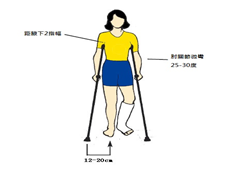 3.Precautions When Using Crutches:
(1)Things to Check Before Using Crutches:
A.Strengthen your arm muscles by practicing exercises such as lifting weights or supporting your upper body with both hands.
B.Practice maintaining a proper standing balance, keeping your head up, chest out, and abdomen engaged.
(2)Correct Crutch Length:
If the crutch is too long, it will put pressure and friction on the armpit, damaging the arm nerves, which can cause numbness or paralysis. If the crutch is too short, it increases the risk of falling. When using crutches, ensure your body weight is placed on your hands, not your armpits, to avoid hand numbness.
(3)Preventing Accidents:
Avoid wearing stockings, slippers, or high heels when using crutches. Ensure the floor is dry, and take care to keep walkways clear and well-lit to prevent falls.
(4)Handgrips:
You can wrap cotton padding around the handgrip to prevent blisters from forming on your palms. The bottom of the crutch should be covered with rubber tips to prevent slipping.
(5)Check for Loose Screws or Adjustments:
Before walking, check if the screws or adjustment knobs are securely fastened to avoid any risk of falling.
(6)Elevate the Affected Limb After Walking:
After walking, the affected limb may become swollen. When you return to bed, elevate the affected limb above the heart for at least 30 minutes.
(7)Assistance During First Walk:
When walking for the first time, a family member should stand about two steps behind the patient to prevent falls.
4.Choosing a Walking Gait:
(1)Three-Point Gait:
Commonly used when the affected limb cannot bear weight but the arms, upper body, and the other leg are functioning normally.

(2)Four-Point Gait:
Used when the affected limb can bear weight.
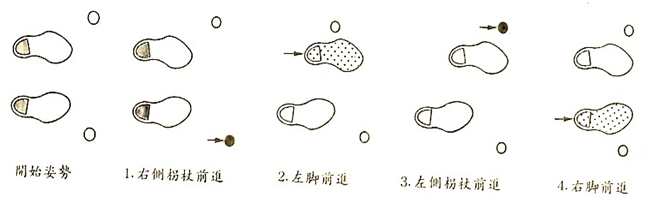
(3)Using Crutches to Go Upstairs and Downstairs:
A.To go upstairs: Step up with the healthy leg first, followed by the affected leg and crutch.
B.To go downstairs: Step down with the affected leg and crutch first, then the healthy leg.