





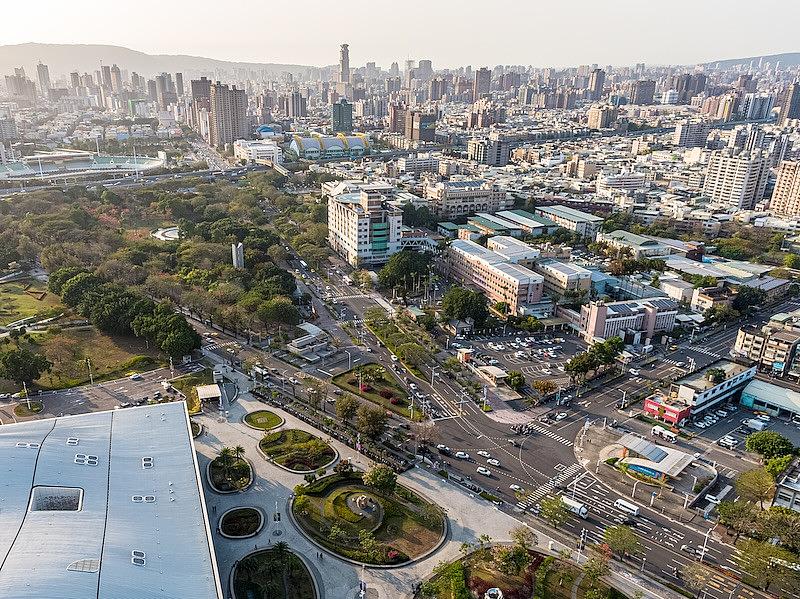
Kaohsiung Armed Forces General Hospital was established after the victory of the War of Resistance when the ROC Armed Forces took over the Japanese military hospital; at that time it was named “Army Ministry Nanjing Army Hospital,” located in Tangshan, a suburb of Nanjing.
Since its founding on October 1, Republic of China year 34, the hospital has relied on the dedication of predecessors who worked day and night, foregoing rest and meals, to lay the foundational planning and construction: after moving to the current site on Zhongzheng 1st Road on March 21, year 66, the hospital has undergone decades of diligent cultivation. Not only has it continuously evolved and improved with the growing domestic economic demands and changing social environment, especially in the rapidly advancing technological era, the medical environment is now vastly different from the past. In addition to reforms and enhancements of both software and hardware facilities, we have devoted ourselves to the research and deepening of medical technology and practice, never slacking or becoming lax. At the same time, we actively participate in hospital accreditation, external competitions, and academic exchanges for learning and growth, constantly encouraging self‑reflection to pursue innovation and change; to improve the quality of medical operations, construction of the “Military Medical Building” began in year 97, with a helipad planned on the top floor to accommodate future disaster medical evacuations from remote areas, and it was officially opened in January of year 102.
Thus, the hospital has entered another new medical era, fully demonstrating rapid and effective organizational efficiency in medical support operations during the year 103 “August 1 Gas Explosion” and the year 105 “0206 Tainan Earthquake.”
Mission
Provide universal medical health care services and regional emergency medical operations.
Serve as the central hospital for the Joint Medical Responsibility System of the Fourth War Zone, coordinating and supporting administration, medical care, and education among the zone's medical systems in peacetime; in wartime, expand bed capacity, requisition civilian hospitals, and assume responsibilities for casualty medical care and referrals.
Responsible for training resident and specialist physicians for clinical military doctors.
Responsible for training ROC Armed Forces emergency medical technician units.
Responsible for clinical internships of medical personnel from civilian nursing and medical schools.
Responsible for various physical examinations for conscripts, admissions to military academies, and related medical checks.
Responsible for medical operations for personnel on Dongsha and Nansha Islands and medical support operations for Matsu.
Physical Structure
Total campus area: 66,309 square meters.
Total medical building floor area: 55,038.49 square meters.
Main medical buildings: Medical Building, Military Medical Building, Civilian Special Ward, Psychiatry Building, Rehabilitation Center, Orchid Garden, Medical and Animal Research Laboratory, Environmental Protection Building, Health Examination Center, Nuclear Medicine Building.
◆ Future Outlook ◆
Looking back, the road in front of the campus has transformed from a mud road to a stone road, and then to an asphalt road; medical equipment and operational quality have also evolved from a fifth‑level health care hospital of the war zone to a regional teaching hospital in Kaohsiung. In terms of medical services, recent years have seen certifications such as the SNQ National Quality Mark for the Heat Stroke Prevention Center, the SNQ National Quality Mark for Child and Youth Emergency Short‑Term Placement Services, and the Ministry of Health and Welfare's Gold Award for Smoke‑Free Hospital, among others. These numerous significant improvements, changes, and national‑level awards and certifications demonstrate our progress. In the future, the Kaohsiung Armed Forces General Hospital will continue to bear the important and irreplaceable role of the war‑zone responsibility central hospital, providing high‑quality medical services and safeguarding the health of military personnel and civilians. This is not only our duty but also our honor. We will continue to advance toward becoming a “trusted guardian of military and civilian health,” further establishing a sustainable foundation for the continued development of the Kaohsiung Armed Forces General Hospital, benefiting the public in the southern region and the armed forces!

