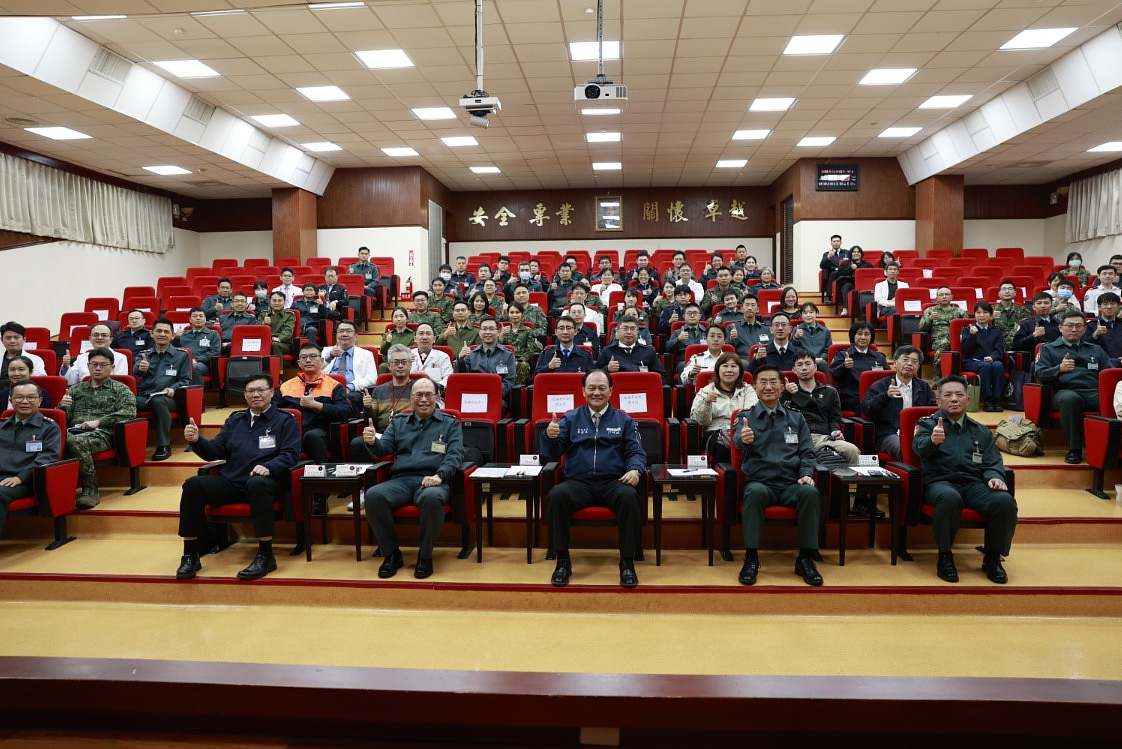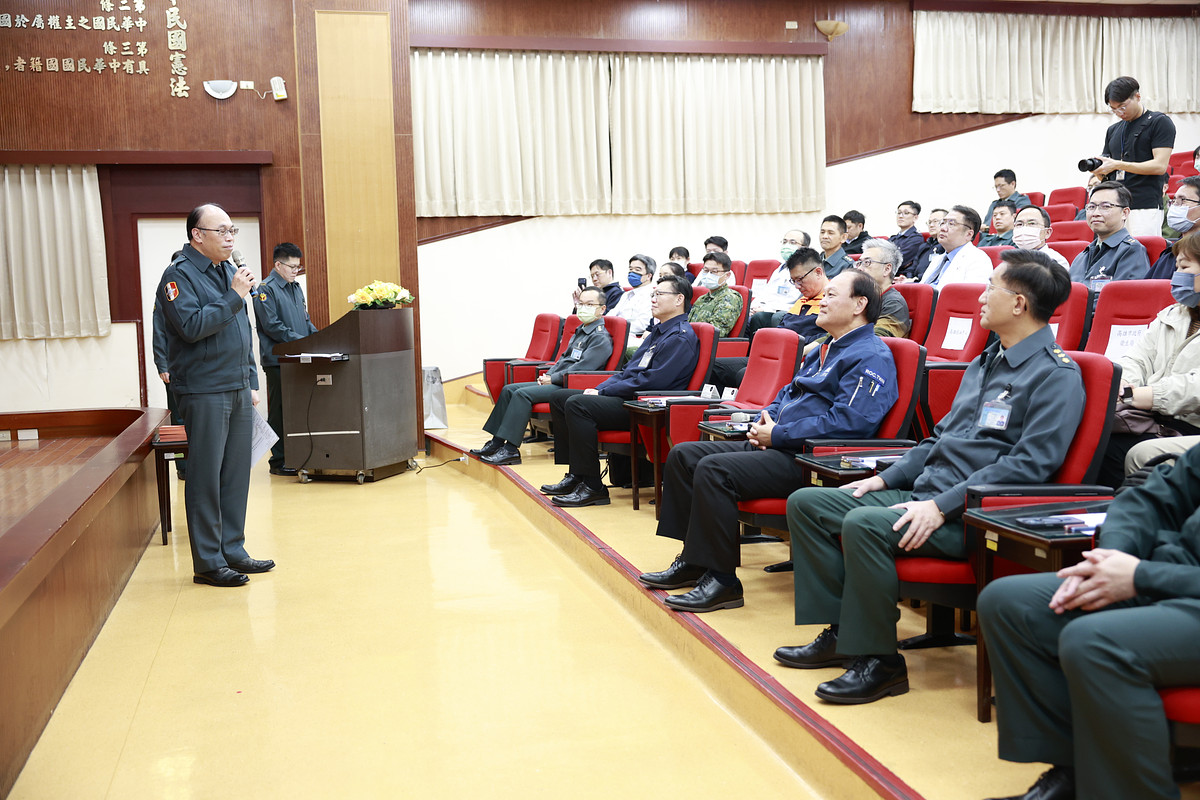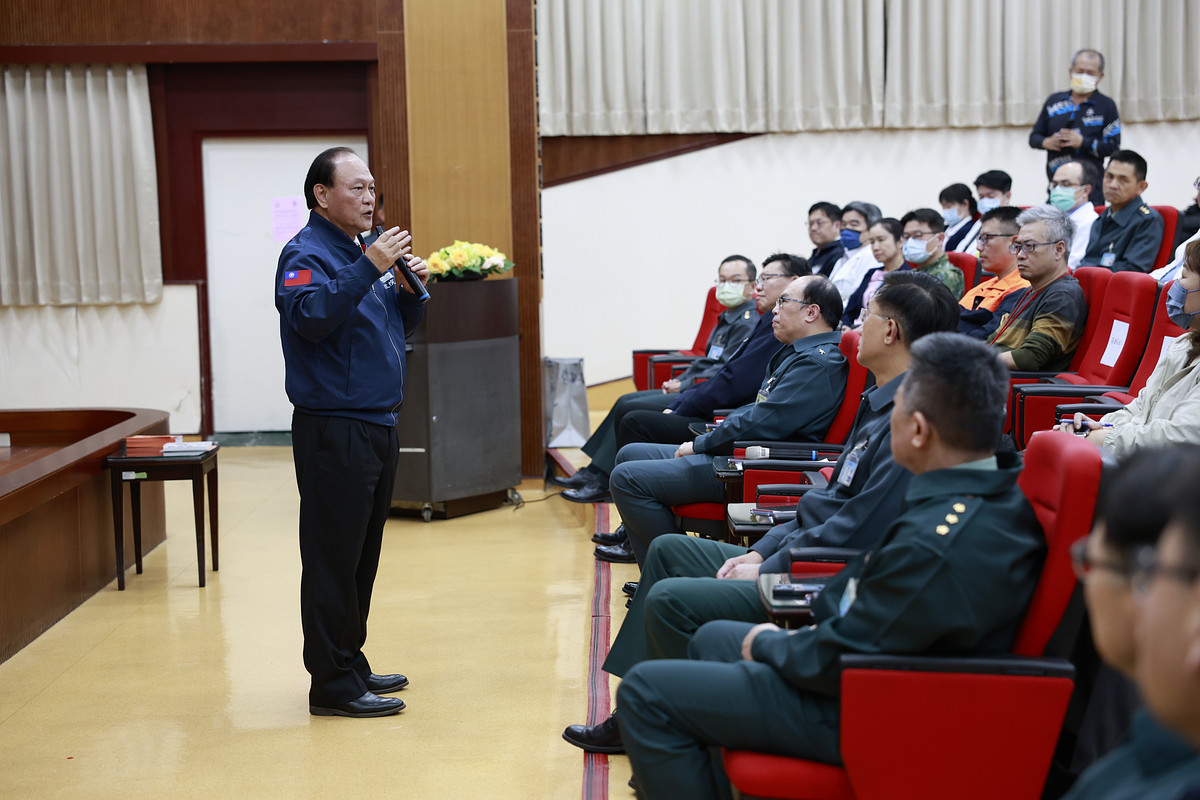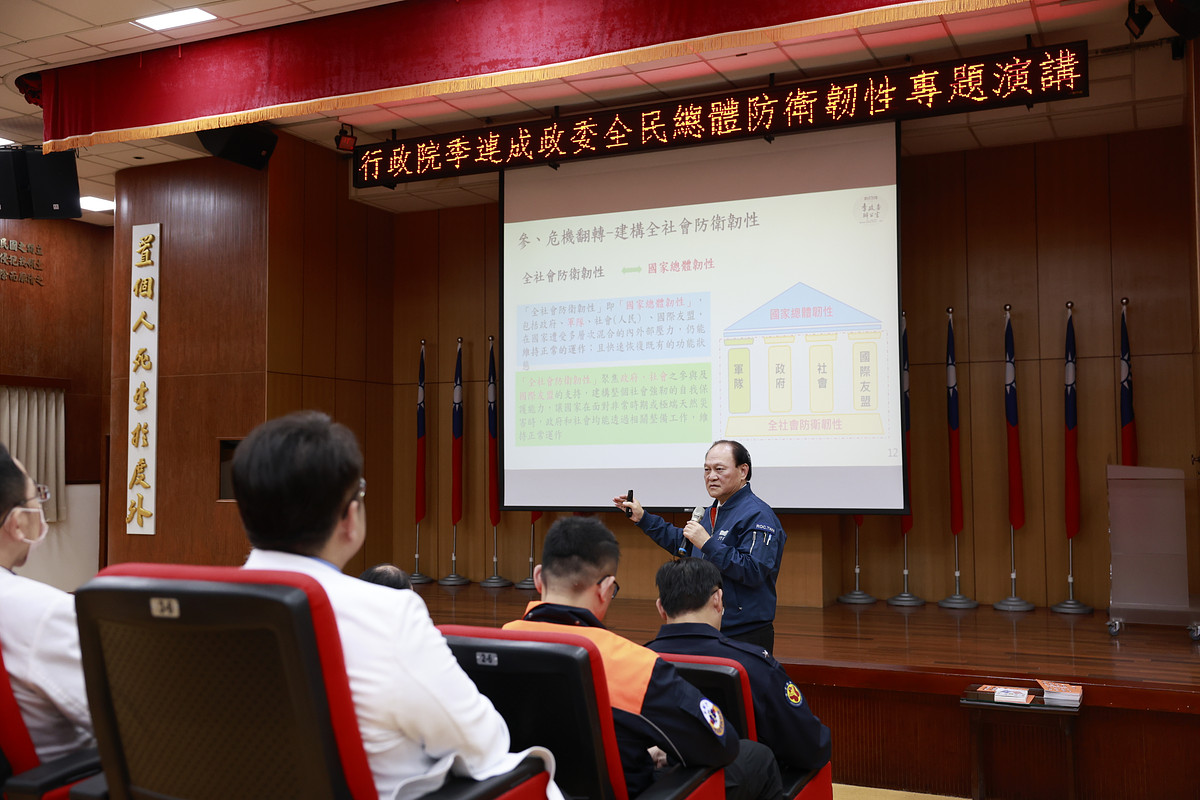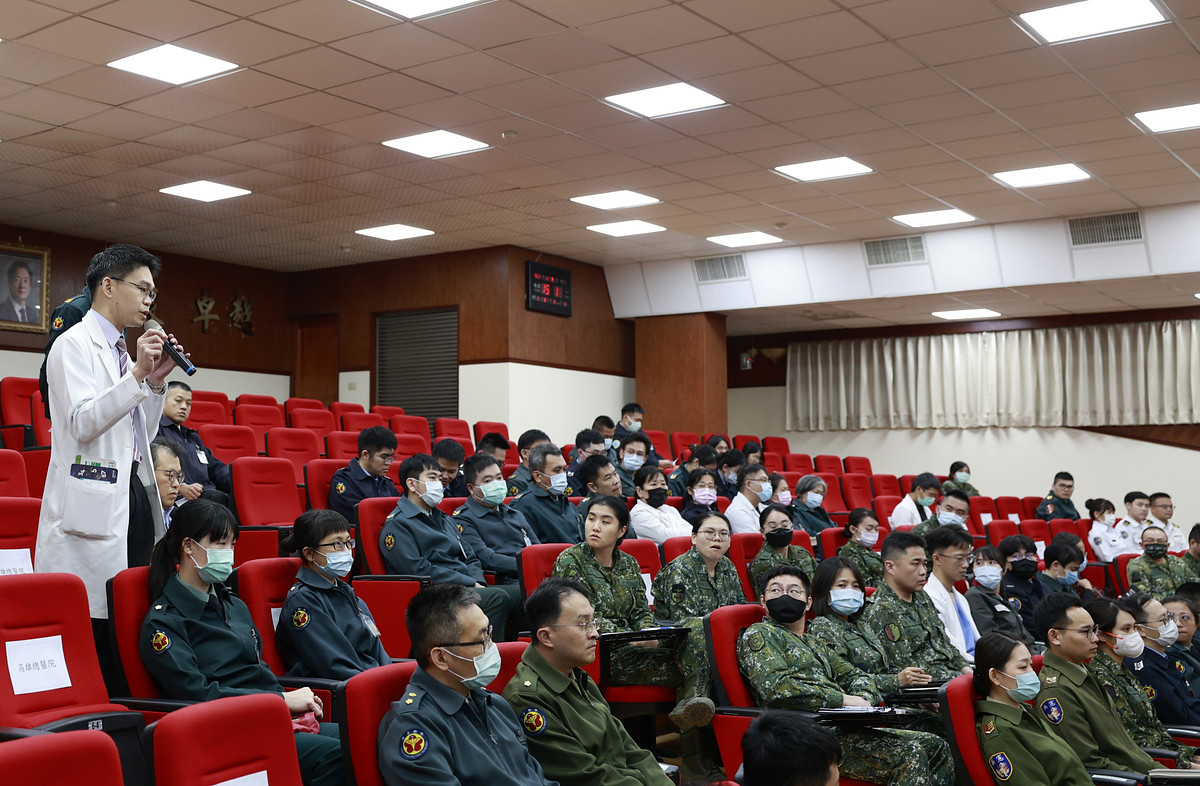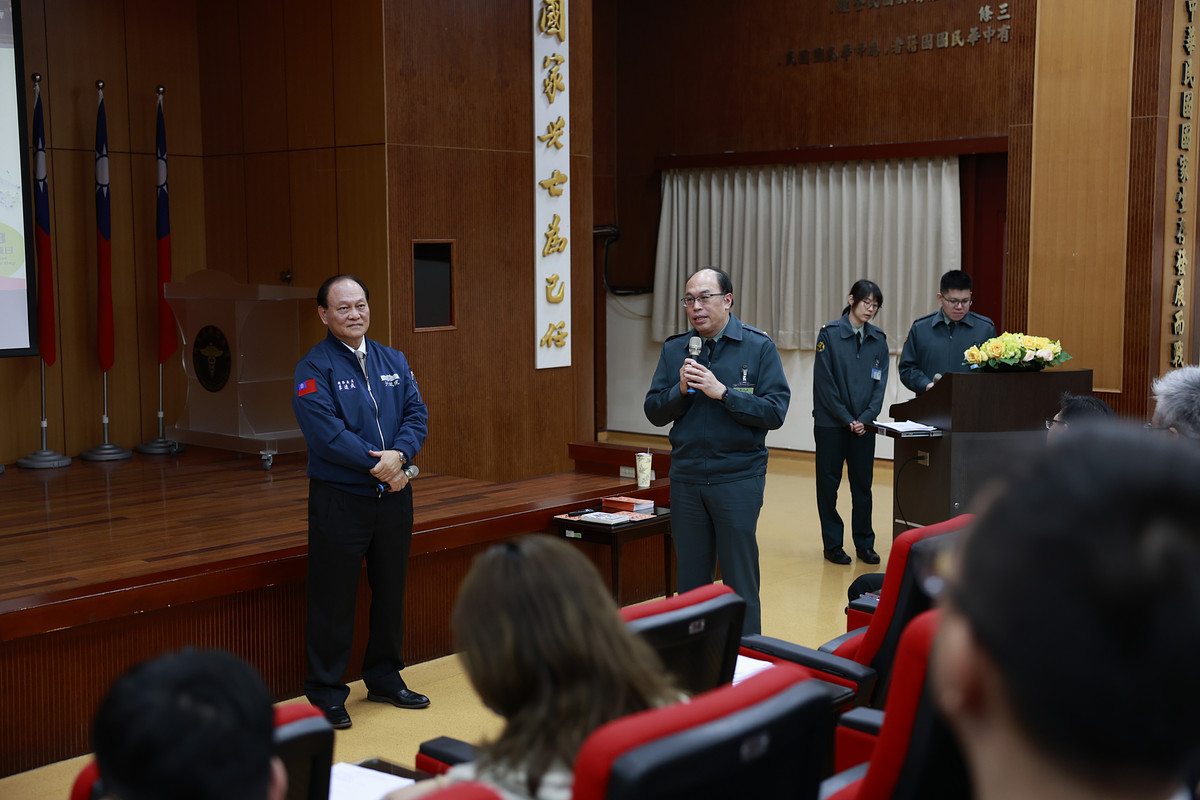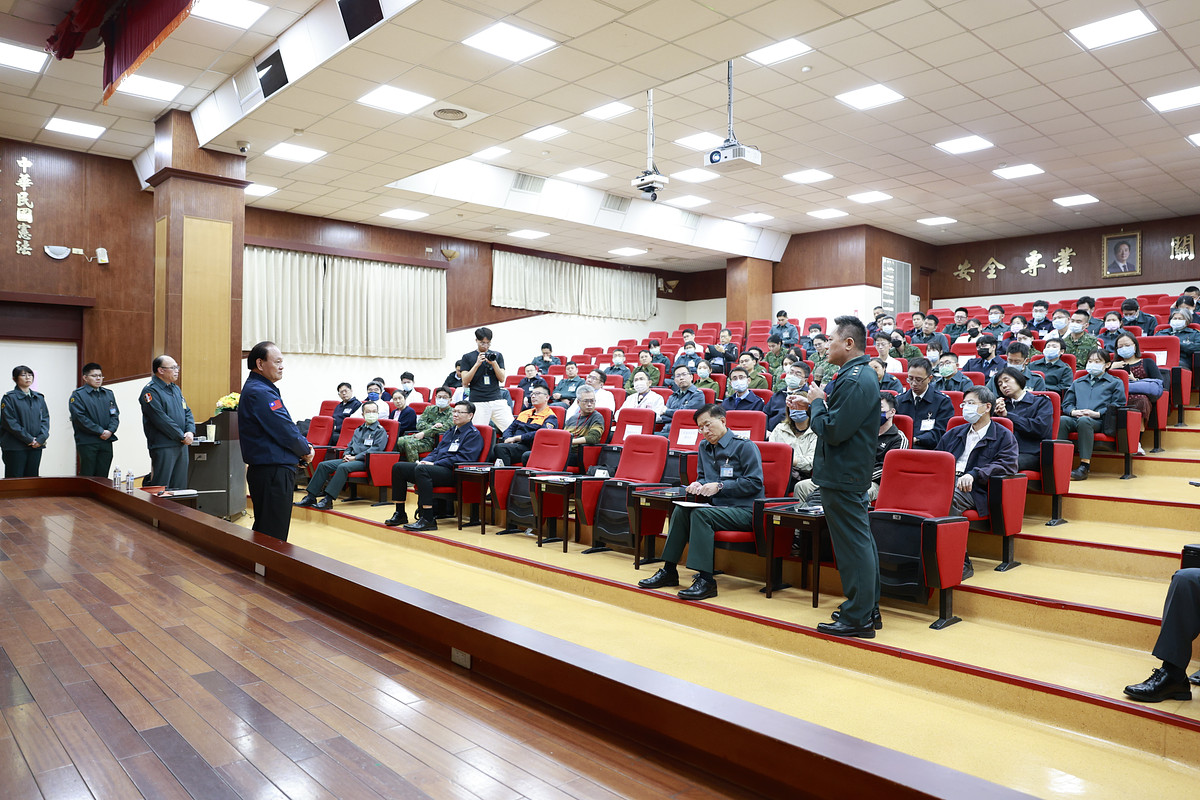



To enhance the nation's overall defense and disaster response capabilities, the Kaohsiung Armed Forces General Hospital recently invited Executive Yuan Minister without Portfolio Mr. Ji Liancheng to the hospital to give a special lecture on “National Comprehensive Defense Resilience,” chaired by Deputy Director‑General of the Military Medical Corps General Chen Yuanhao, and gathered commanders of various military hospitals and operational‑zone units, as well as representatives from Kaohsiung City Government’s Civil Affairs Bureau, Health Bureau, and Fire Bureau, with over a hundred participants to discuss building societal defense resilience.
During the meeting, Commissioner Ji emphasized the concept of societal resilience, explaining that when the nation suffers major disasters (such as earthquakes, pandemics, or man‑made disasters), it must demonstrate sufficient resilience to maintain normal life operations. He stressed that the government’s promotion of the “Societal Defense Resilience” policy involves improving systems and integrating military and civilian resources, and through widely disseminating “When a crisis occurs” safety guidelines and other measures, enhancing the whole society’s emergency response capability to disasters and various security threats. Among them, military hospitals play an indispensable core role in combat medical preparedness, disaster response, and the transition between peace and wartime.
Deputy Director‑General of the Military Medical Corps, General Chen Yuanhao, stated that the military medical system is sparing no effort to implement societal defense medical resilience and has demonstrated concrete results, including:
1. All military hospitals nationwide have been incorporated into the “National Critical Infrastructure (CI)” and have completed the formulation of safety protection plans, with subsequent planning of related drills to verify disaster response capabilities.
2. To extend medical resilience, the military hospitals and Health Bureau are progressively establishing Forward Surgical Team (FRST) capabilities at each primary responsibility hospital, advancing the deployment of medical teams and surgical equipment to achieve the goal of medical fielding.
This symposium, guided by Commissioner Ji’s policies, emphasized that the success of national resilience lies in the sustainable use of resources. Through each “Three‑in‑One” meeting of the military, government, and civilians, the armed forces, government, and private sector present their needs and allocate disaster response resources, ensuring proper planning, training, and exercises during peacetime, so that when disasters strike, societal defense resilience is demonstrated, guaranteeing that the nation can maintain normal social operations and protect the lives and property of its people.