


Excerpt from “A Life of Military Horse Under the White Robe, Medical View of Life History”
Before officially entering the hospital, medical students have a robe‑granting ceremony that includes the Geneva Declaration (physician’s oath), the Helsinki Declaration (human research regulations), and the Lisbon Declaration (patient rights), dedicated to serving all humanity with the highest standards of medical education, research, technology, ethics, and medical care.
Unlike ordinary medical students, a military medical officer must first undergo the “enlistment trainee” phase before entering the medical profession. A representative leads all new recruits in raising their right hands to swear: “Dedicate oneself to the military, be loyal to the nation, strive to become a steadfast soldier; fear no hardship, fear no difficulty, obey orders absolutely, strictly observe military discipline, and with iron will endure the toughest training.” This signifies the transformation from civilian to soldier, and through rigorous enlistment training and a rebirth, one officially becomes a soldier, marking the beginning of the military physician’s mission.
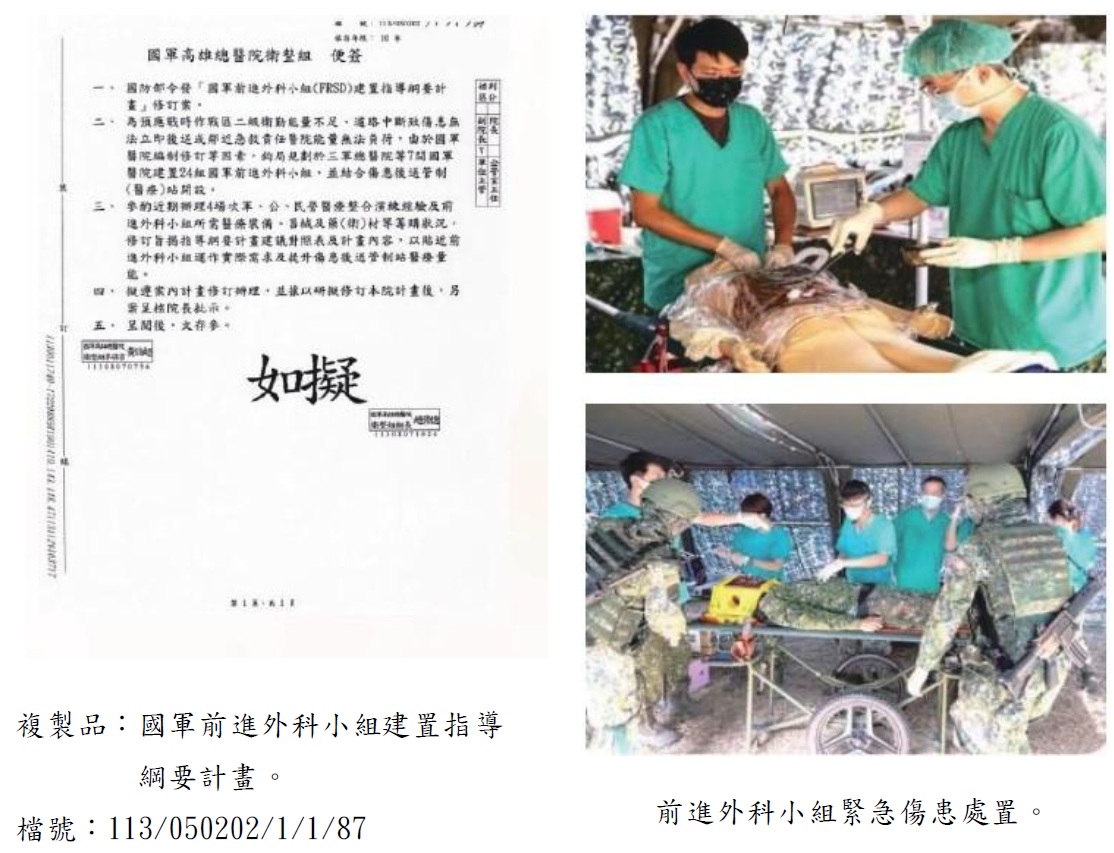
As an essential part of the national defense system, the role of a military hospital goes beyond providing medical services. In both peacetime and wartime, the hospital strives to improve the quality of medical care, safeguard the health of military personnel and civilians, actively advance combat medicine, conduct training for emergency rescue technicians at all levels, enhance the troops’ pre‑hospital emergency response capabilities, and build tactical combat casualty care on the foundation of emergency rescue skills, in line with the Ministry of Defense’s mission to promote tactical combat casualty rescue.
During war‑game training, we jointly simulate the treatment of large numbers of casualties with medical units, strengthening field medical operations and major disaster response capabilities, as well as providing combat casualty rescue. Whether applied to disaster relief or combat, this effectively enhances medical support performance, becoming a solid backbone.
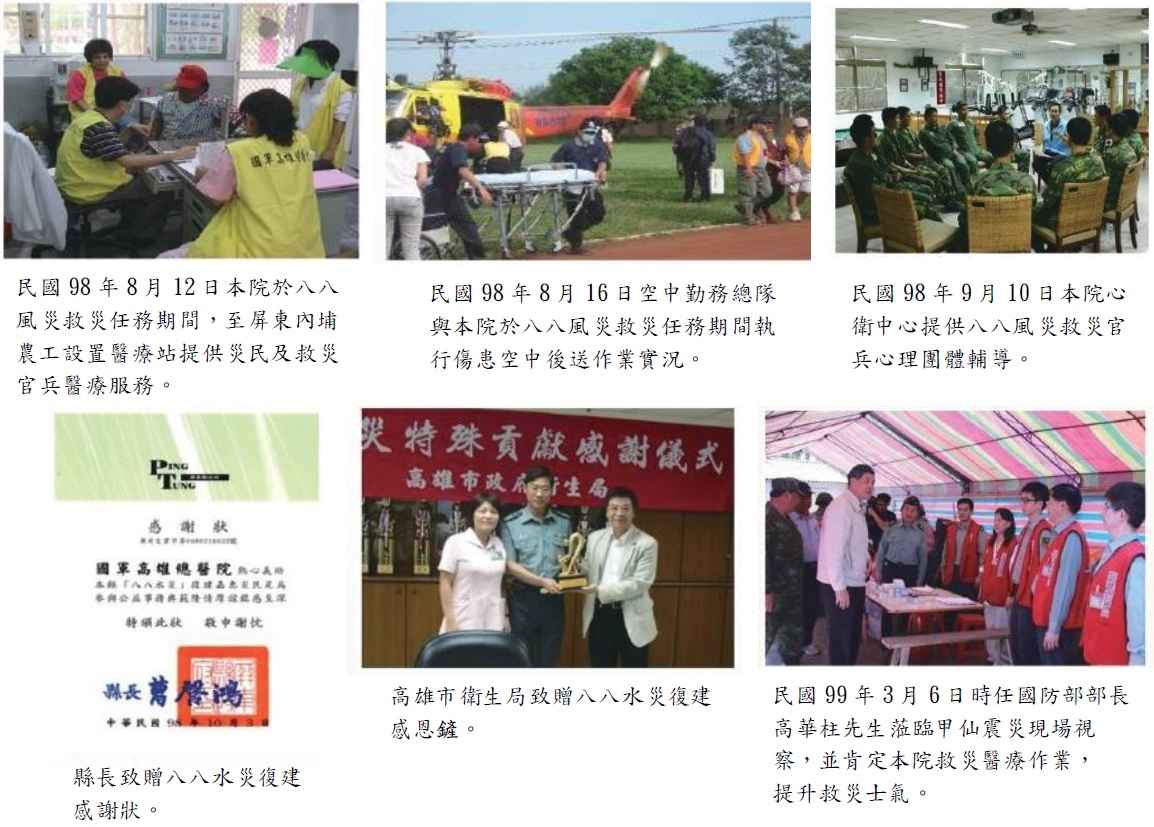
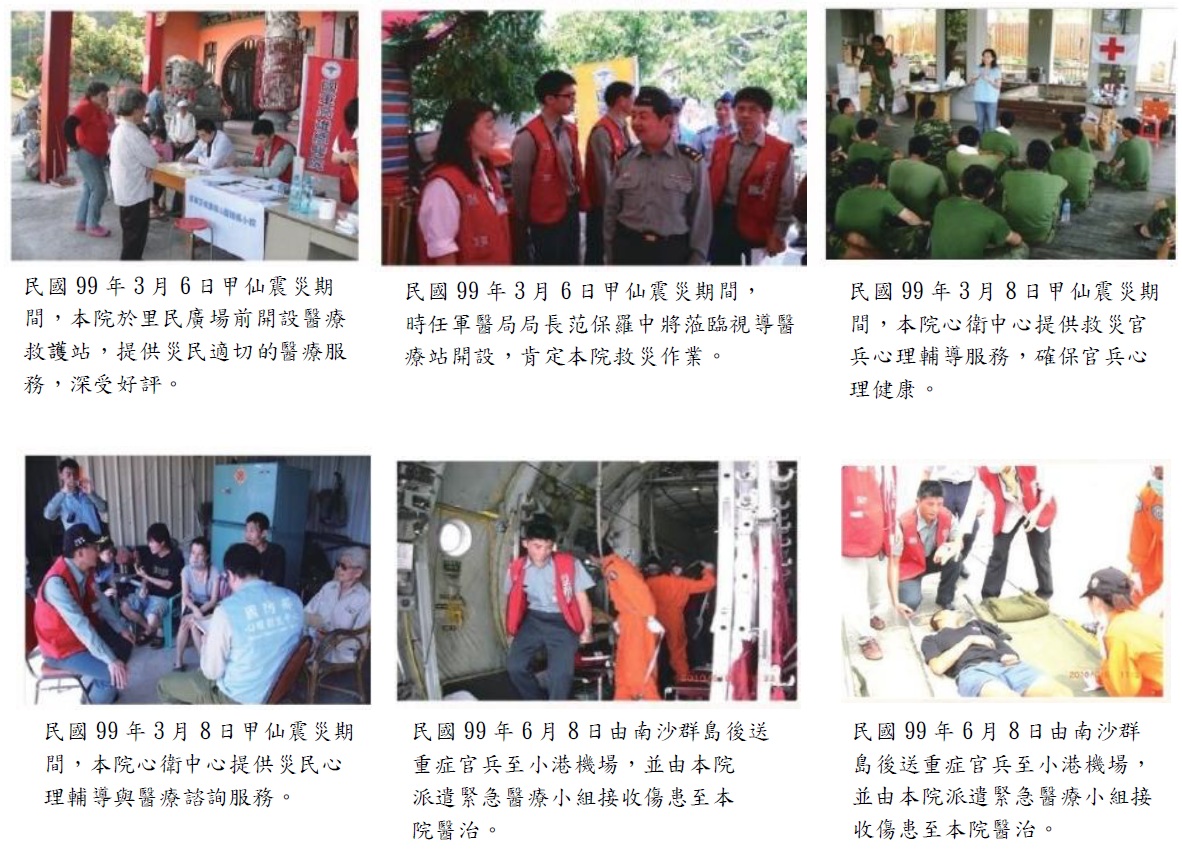
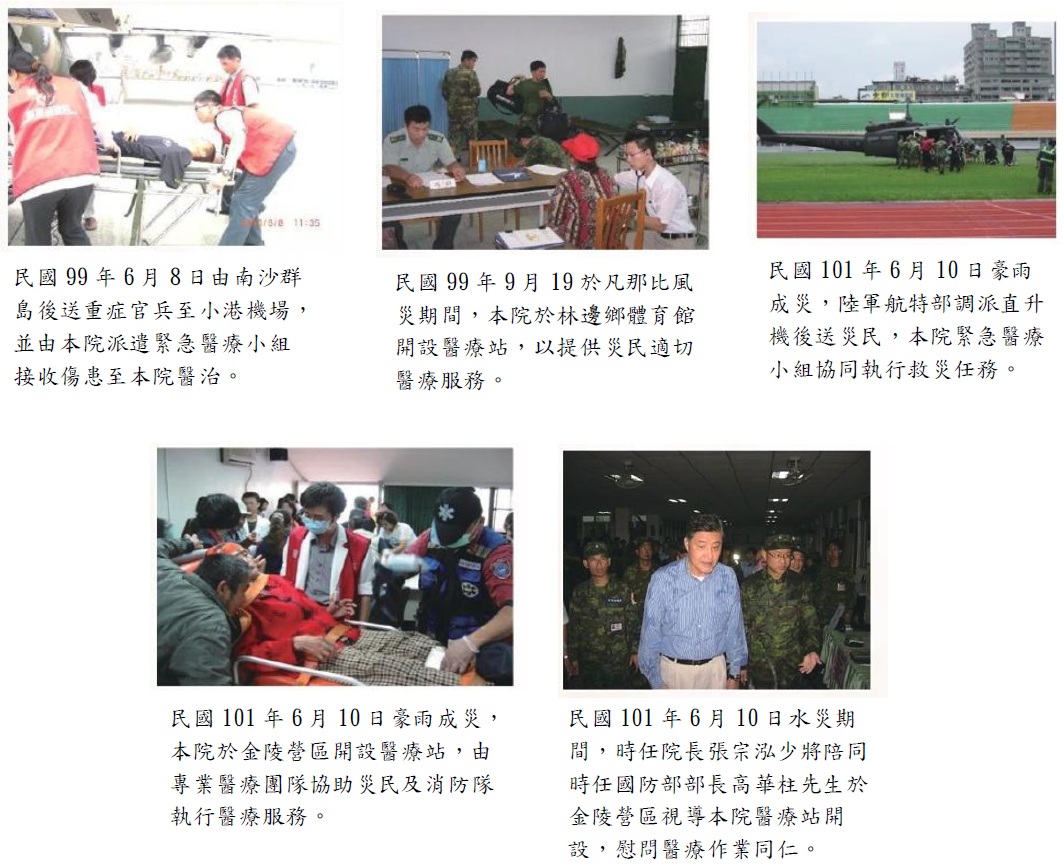
Disaster relief is treated as combat; we not only fulfill the soldier’s mission to protect the people, but also demonstrate the professionalism and responsibility of military medical personnel, becoming a reliable support for the public, and embodying the spirit of “both a physician and a soldier” through our actions.
Frontline of the Battlefield, a Shelter for Military and Civilians – Matsu Beigao Hospital
The Matsu archipelago hangs isolated in the open sea, with relatively scarce medical resources. When residents fall ill, they usually have to charter a boat to the Fuzhou area for treatment; those with limited means rely on herbal medicine or hope for luck.
After the military took station, the greatest change on the island was the substantial improvement of medical resources—the construction of the Army Matsu Field Hospital Beigan Branch, also known as Beigao Hospital, which initiated a resource‑sharing model of “military‑civil integration, one island, one destiny.” As a key medical hub in Matsu, Beigao Hospital is accessed through a tunnel, with its entrance guarded by two massive iron doors facing Taiwan to protect against enemy attacks in wartime; its importance is indescribable.
In the 68th year of the Republic of China (1979), Beigao Hospital underwent underground construction, adding powered lighting and ventilation/damp‑proof equipment, and was divided into medical, ward, and administrative sections, equipped with operating rooms, X‑ray rooms, etc., with some medical devices and instruments donated by allied nations. In July of the 87th year of the Republic of China (1998), Beigao Hospital, in line with the National Health Insurance, rotated two medical officers each quarter to support medical operations, significantly improving care quality. In the 88th year (1999), together with the Tri‑Service General Hospital, it established remote consultation hardware, allowing island residents to receive multi‑specialty medical services, greatly raising the island’s medical standards. In the 90th year (2001), attending physician Dr. Hsueh Chao‑wen, while supporting Beigao Hospital, encountered an emergency trauma patient with a knife wound that injured the trachea and lungs and caused hemothorax. Dr. Hsueh used the remote consultation system to confer with specialists at the Tri‑Service General Hospital, successfully completed the surgery, and after the patient’s vital signs stabilized, transferred him to the Tri‑Service Hospital for further treatment.
Military doctors not only provide medical resources to island residents but also educate them on health and preventive care. In this context, residents cherish the hard‑won resources and recognize the importance of prevention over treatment. In the 108th year of the Republic of China (2019), when the severe special infectious pneumonia outbreak occurred, Matsu residents experienced zero severe cases and zero deaths, weathering the pandemic—a testament to the deep roots of military physicians.