



Kaohsiung Armed Forces General Hospital “Fireline Superhero”FHIR‑LINE Bot makes its debut at the Greater South AI Smart Health Expo
Connecting international medical information standards via LINE, allowing the public to query appointment progress, aggregate health data across hospitals in the most familiar chat window, and support real‑time switching among four languages
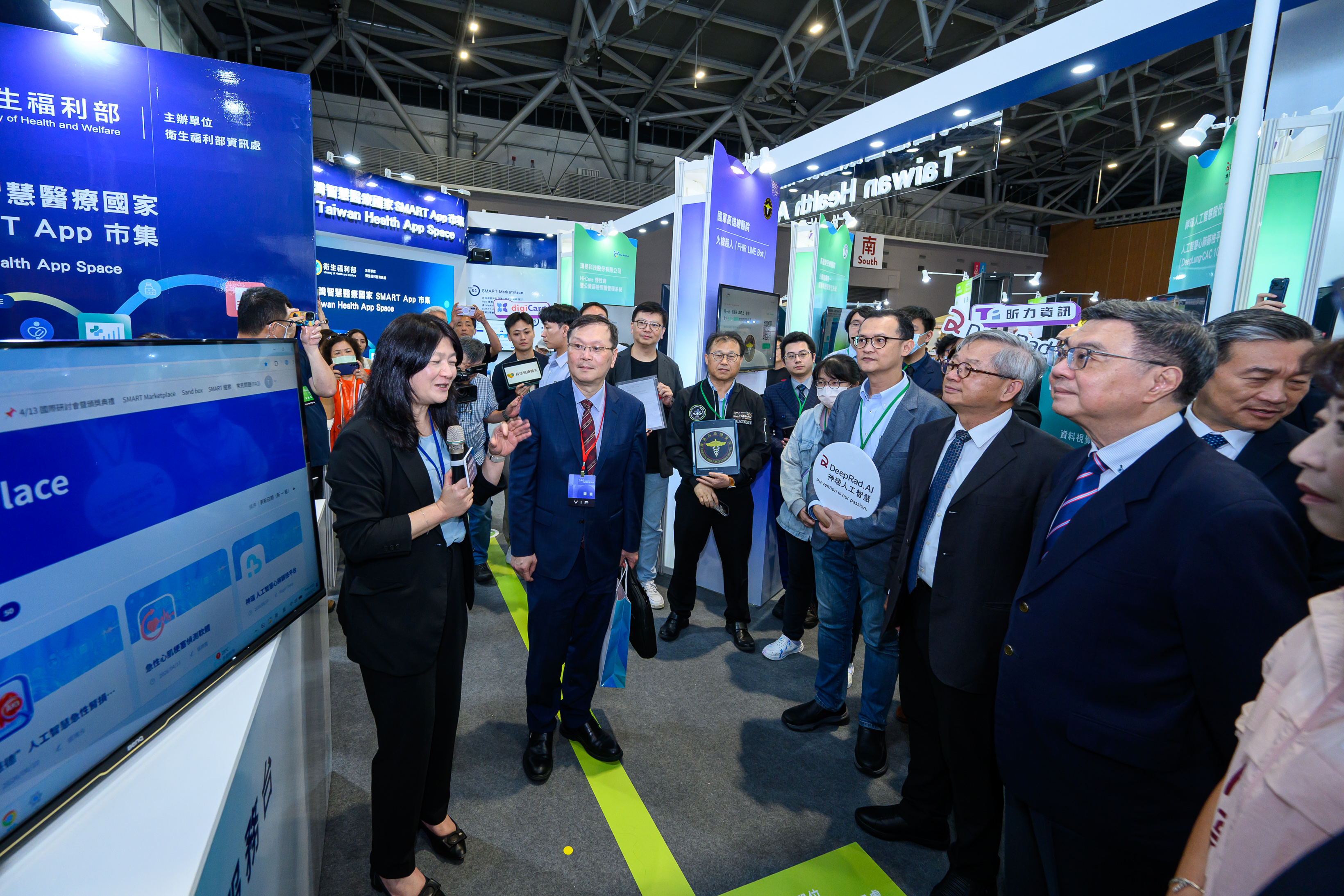
The “2026 Greater South AI Smart Health Expo” opened on June 12 at the Greater Tainan Convention Center, with Premier Zhuo Rongtai (center) inspecting the Ministry of Health and Welfare pavilion.
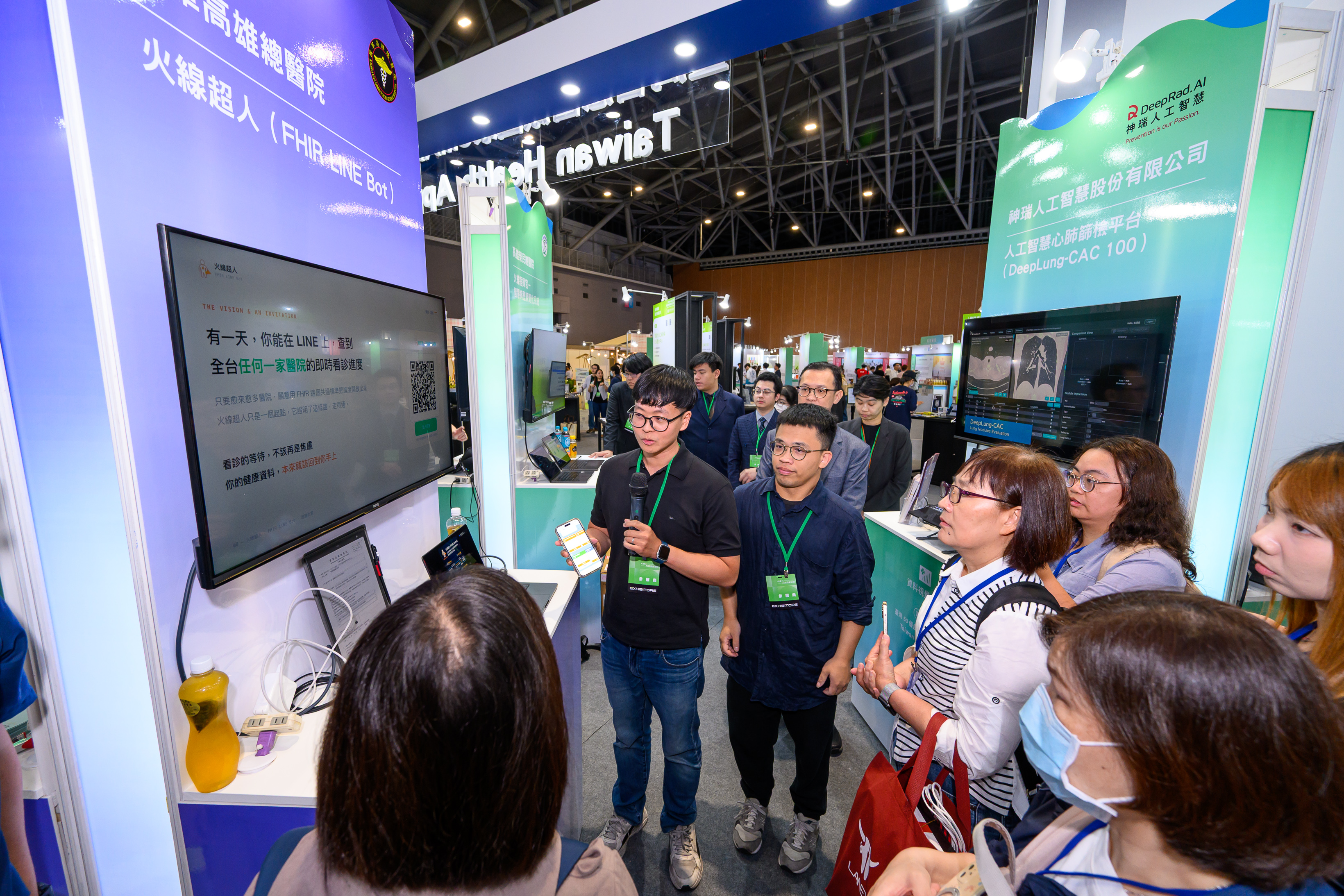
The Kaohsiung Armed Forces General Hospital team explained the “Fireline Superhero (FHIR‑LINE Bot)” to the public, with the screen behind showing the vision “In the future, you can check the appointment progress of any hospital in Taiwan via LINE.”
In hospital waiting rooms, the biggest fear is missing your turn after standing up. To alleviate this familiar anxiety for patients, the Kaohsiung Armed Forces General Hospital, at the recent “2026 Greater South AI Smart Health Expo” Ministry of Health and Welfare pavilion’s “Medical AI” exhibition area, launched the smart appointment progress inquiry assistant “Fireline Superhero (FHIR‑LINE Bot)”. It attracted many visitors and guests on site, becoming one of the exhibition’s highlights.
Unlike most medical applications, users do not need to download an additional app to use Fireline Superhero. By adding “Fireline Superhero” as a friend on the everyday LINE app and typing “check progress”, they can instantly see the current call number in the consultation room, how many patients are still waiting ahead, and the number of patients already seen or not yet checked in for the day. For over 21 million LINE users across Taiwan, checking appointment progress returns to the most familiar interface. During the exhibition, many visitors scanned the QR code on the spot to try it, receiving enthusiastic responses.
Fireline Superhero focuses on solving the long‑standing “data silos” problem that has troubled patients. In the past, blood test reports, X‑ray images, and chronic medication records from different hospitals were separate, making it difficult to obtain a complete health picture. With Fireline Superhero, users can bind multiple hospitals at once, aggregate records in real time, and then let artificial intelligence perform personalized health trend analysis and alerts. The system also supports real‑time switching among Traditional Chinese, English, Japanese, and Thai, including the operation menus, catering to the needs of new immigrants, migrant workers, and international patients.
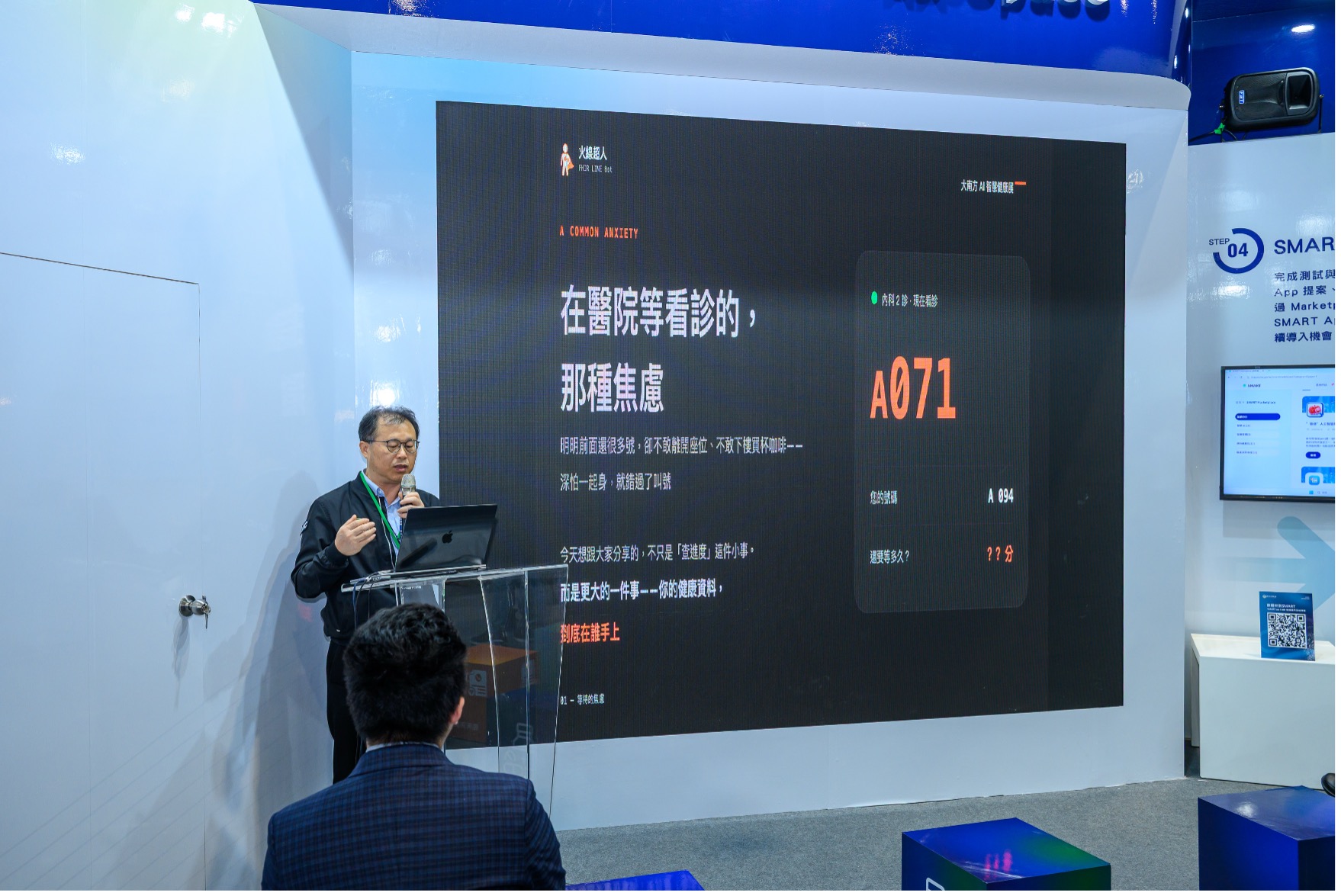
The team introduced Fireline Superhero at the exhibition’s presentation area, with the screen behind opening with “the anxiety of waiting for a consultation at the hospital”, demonstrating real‑time call number inquiry.
Regarding data security, Fireline Superhero is built on international and local medical information standards such as FHIR, SMART on FHIR, and the Ministry of Health and Welfare’s TW Core. Users must first grant authorization before the system can access their personal data, and throughout the process it acts only as a “bridge, storing no data”. The exhibition also showcased the latest development: healthcare staff can, with a single LINE command, instantly deliver structured information such as surgical consent forms to electronic paper displays at the bedside, extending the application from “query” to “write‑back” on the clinical side.
During the exhibition, several officials visited the booth, listened to the team’s presentation, and observed the operation on site. Fireline Superhero addresses the most palpable patient concern of waiting for a consultation, and behind it employs open international standards and rigorous privacy protection design, demonstrating the concrete feasibility of cross‑hospital medical information interoperability, and echoing the policy direction of “returning health data to the public.”
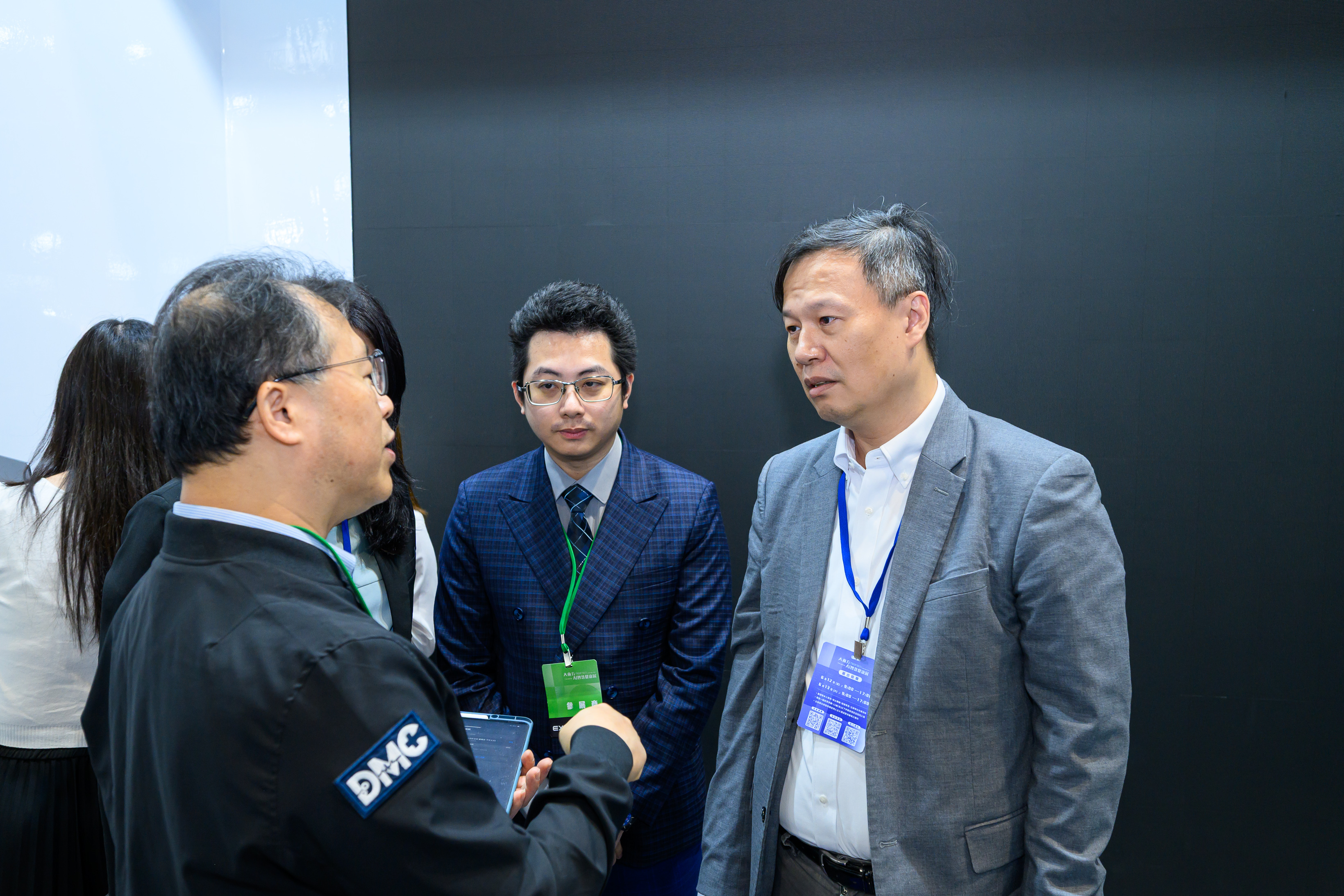
During the exhibition, Ministry of Health and Welfare Information Department Director Li Jianzhang (right) visited the booth, gaining an in‑depth understanding of Fireline Superhero’s query and cross‑hospital aggregation functions.
It is worth noting that from the LINE chatbot, four‑language interface, cross‑hospital data integration to bedside electronic paper delivery, the entire system was independently developed by a single in‑house developer using the Ruby on Rails framework and AI‑assisted development, equipped with over a hundred automated tests and one‑click cloud deployment capability, showcasing the development prowess of “one person can build a complete application” in the AI era.
The hospital stated that Fireline Superhero’s goal is to enable the public to one day check the real‑time appointment progress of any hospital in Taiwan via LINE; as more hospitals adopt the FHIR common standard to expose progress, this path will become broader. Waiting for a consultation should no longer cause anxiety; health data belonging to the public should rightfully be in the hands of the public.
